Shared Hosting vs VPS for Small Businesses: Which One Is Actually Worth It?
For small businesses, choosing between shared hosting and VPS hosting is not a technical decision. It is a business decision that affects website performance, reliability, and long-term costs.
Many small business owners either overpay for resources they do not need or underpay and suffer from downtime and slow websites. This article breaks down the real differences between shared hosting and VPS, when each option makes sense, and how to choose without wasting money.
Understanding Shared Hosting
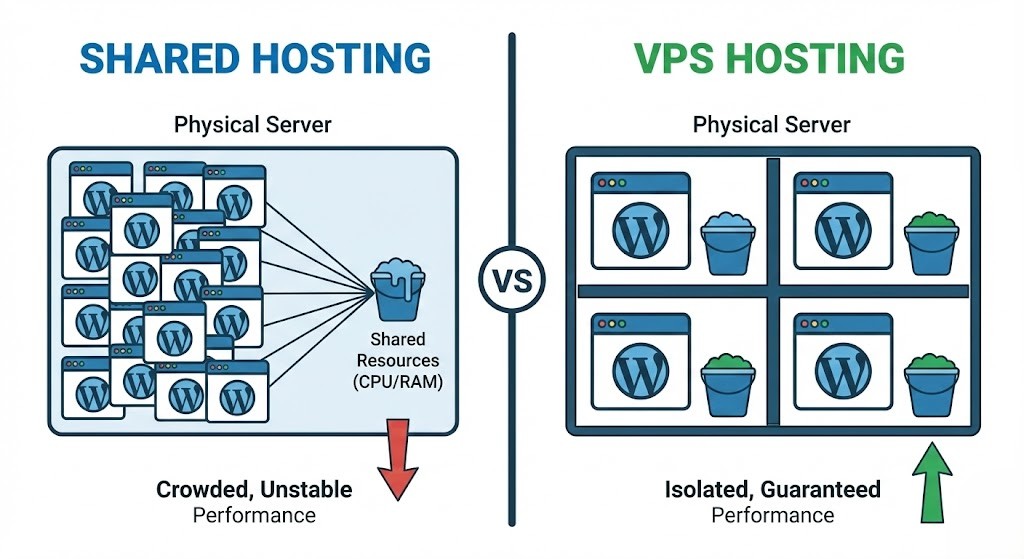
Shared hosting means multiple websites run on the same server and share its resources such as CPU, memory, and bandwidth.
Advantages of Shared Hosting
Low upfront cost
Easy to set up
No technical management required
For new or small business websites, shared hosting can be a practical starting point.
Limitations of Shared Hosting
Performance depends on other websites on the server
Limited server control
Higher risk of slowdown during traffic spikes
Shared hosting becomes risky when your business website starts generating consistent traffic or sales.
Understanding VPS Hosting
VPS (Virtual Private Server) hosting divides a physical server into virtual servers with dedicated resources.
Advantages of VPS Hosting
Guaranteed CPU and RAM
More stable performance
Better security isolation
Greater control over server settings
VPS hosting is designed for businesses that need reliability and scalability.
Limitations of VPS Hosting
Higher cost than shared hosting
Requires basic technical knowledge or managed services
VPS is not always necessary for very small or low-traffic websites.
Performance Comparison: Shared Hosting vs VPS
Website Speed
Shared Hosting: Speed fluctuates depending on server load
VPS Hosting: Consistent performance regardless of other users
For businesses where speed affects conversions, VPS has a clear advantage.
Stability and Uptime
Shared Hosting: Higher risk of downtime due to other users
VPS Hosting: More stable with fewer external risks
Downtime during business hours can directly impact revenue.
Security Considerations
Shared Hosting: Vulnerable if another site on the server is compromised
VPS Hosting: Better isolation reduces cross-site risks
Security incidents often cost more than hosting upgrades.
Cost Comparison: Short-Term vs Long-Term
Shared hosting appears cheaper initially, but costs can increase due to:
Forced upgrades
Performance limitations
Website migration expenses
VPS hosting costs more monthly, but often:
Reduces downtime
Supports growth without migration
Provides better long-term value
The cheapest option is not always the most affordable over time.
Which Hosting Is Right for Your Small Business?
Choose Shared Hosting If:
Your website is informational
Traffic is low to moderate
Budget is very limited
Downtime does not directly affect sales
Choose VPS Hosting If:
Your website generates leads or sales
Traffic is consistent or growing
Performance affects user experience
You want long-term stability
Many small businesses start with shared hosting and transition to VPS once growth demands it.
Common Mistakes Small Businesses Make
Choosing VPS too early without real traffic
Staying on shared hosting for too long
Ignoring performance metrics
Underestimating future growth
Choosing based only on promotional pricing
Avoiding these mistakes saves time and money.
Final Verdict: Start Smart, Upgrade Strategically
Shared hosting is suitable for starting out, but VPS hosting becomes necessary as a business grows. The key is not choosing the “best” hosting, but choosing the right hosting for your current business stage.
Hosting should support growth, not limit it.
.jpg)